Savoir-faire documentation is the deliberate capture of practical, experience-based knowledge—such as a craftsperson’s judgment, techniques, and sensory cues—so it can be taught and used after that person retires. Because this knowledge is often difficult to express in written instructions, effective documentation combines observation, interviews, video, annotated examples, and supervised practice. The need is substantial: UNESCO’s 2022 living-heritage report counted more than 700 elements on its Intangible Cultural Heritage lists, while the U.S. Bureau of Labor Statistics projects about 34,900 annual openings for welders, cutters, solderers, and brazers from 2023 to 2033, many arising from workers leaving the labor force or changing occupations. This article explains what savoir-faire documentation means, how to capture tacit knowledge, how to validate and preserve it, and how organizations can act before a master craftsperson’s retirement.
Defines savoir-faire documentation as a knowledge-retention practice
Savoir-faire documentation is a structured process for making specialized practical knowledge observable, teachable, and retrievable. “Savoir-faire” means knowing how to do something; in a workshop, it may include a hand movement, a sequence of adjustments, or a judgment about when a material is ready. Documentation does not mean replacing skilled practice with a manual. It means recording the guidance and evidence that help another person learn, repeat, and refine the practice.
Knowledge-management researchers distinguish explicit knowledge, which can readily be written or specified, from tacit knowledge, which is rooted in experience and can be hard to articulate. Michael Polanyi’s often-quoted formulation, “we can know more than we can tell,” captures the challenge. Ikujiro Nonaka and Hirotaka Takeuchi likewise describe knowledge creation as movement between tacit and explicit forms, including learning by shared experience and converting practice into concepts, models, or instructions.
The distinction matters because craft competence is more than a list of steps. A written procedure may state a temperature or tool angle, but a master may also recognize a faint change in sound, resistance, color, or smell. Those signals can guide a decision without being consciously named. A useful record therefore identifies both what the craftsperson does and how they decide what to do next.
Tacit knowledge includes embodied judgment
Tacit craft knowledge is the experience-based ability to perceive and respond to a work situation, including skills that are difficult to explain fully in words. It may appear as pressure applied by hand, timing learned through repetition, recognition of a material’s behavior, or the ability to diagnose a defect from subtle evidence. These capabilities develop through practice and feedback, so recording them requires more than asking an expert to dictate a procedure.
The U.S. National Institute of Standards and Technology’s work on manufacturing workforce development emphasizes the importance of workplace learning, skills, and knowledge transfer as production technologies and job requirements change. In craft settings, the same principle applies: experienced workers’ judgments are operational assets, particularly where quality depends on material variability or fine manual control.
Savoir-faire documentation differs from a standard operating procedure
A standard operating procedure (SOP) describes an agreed method, often to support consistency, safety, or regulatory compliance. Savoir-faire documentation complements an SOP by recording expertise that the formal procedure may omit: diagnostic cues, acceptable variation, common failure patterns, and reasons for choosing one technique over another. It should not silently override an approved safety or quality procedure; conflicts must be reviewed by the responsible technical and safety authorities.
For example, an SOP might specify a machine setting, while an expert record explains how an operator notices tool wear, what evidence warrants stopping the job, and whom to consult when a material behaves unexpectedly. The combined record is more useful than either document alone: the SOP anchors standard practice, while the savoir-faire record supports interpretation and learning.
Captures savoir-faire through observation, conversation, and practice
Capturing savoir-faire means eliciting knowledge in the context where it is used, then turning observations into material that learners can test and apply. A reliable process begins before retirement is imminent. It identifies critical tasks, arranges access to the expert and their work, and includes a successor or trainee who can ask questions and demonstrate what they have understood.
The International Labour Organization has repeatedly highlighted the effects of workforce ageing and the importance of skills development and intergenerational knowledge transfer. The precise retirement risk varies by sector and location, but the practical implication is consistent: organizations should treat retirement planning as a knowledge-continuity task, not merely a staffing transaction.
Task and risk mapping prioritizes what to capture
Task and risk mapping identifies which activities are most vulnerable if an expert leaves. A team can score tasks by business or cultural importance, frequency, difficulty, safety or quality consequences, the number of people able to perform them independently, and the time required to train a replacement. This creates a prioritized capture plan rather than an unmanageable attempt to document every detail of a person’s career.
A simple risk register can classify each critical task as documented, demonstrated by more than one worker, or dependent on a single expert. It should also identify practical constraints: access to specialist equipment, scarce materials, seasonal work, customer confidentiality, and the expert’s available time. The register is an internal planning tool, not a universal statistical measure, so teams should define scoring criteria and revisit them as work changes.
Cognitive task analysis reveals decisions and cues
Cognitive task analysis is a family of methods for uncovering the decisions, cues, goals, and mental models involved in skilled work. Instead of asking only “What are the steps?”, an interviewer asks the craftsperson to explain a specific difficult job: What did you notice? What alternatives did you consider? What would have indicated that the work was going wrong? What would a novice likely miss?
The method is especially useful for troubleshooting and exceptions, because experts often perform routine work automatically but can explain unusual situations more clearly. A practical interview can use a real artifact, work order, or defect as a prompt. The interviewer should avoid leading questions, record the expert’s own terminology, and distinguish observed facts from interpretations that require later testing.
Demonstration and video preserve embodied technique
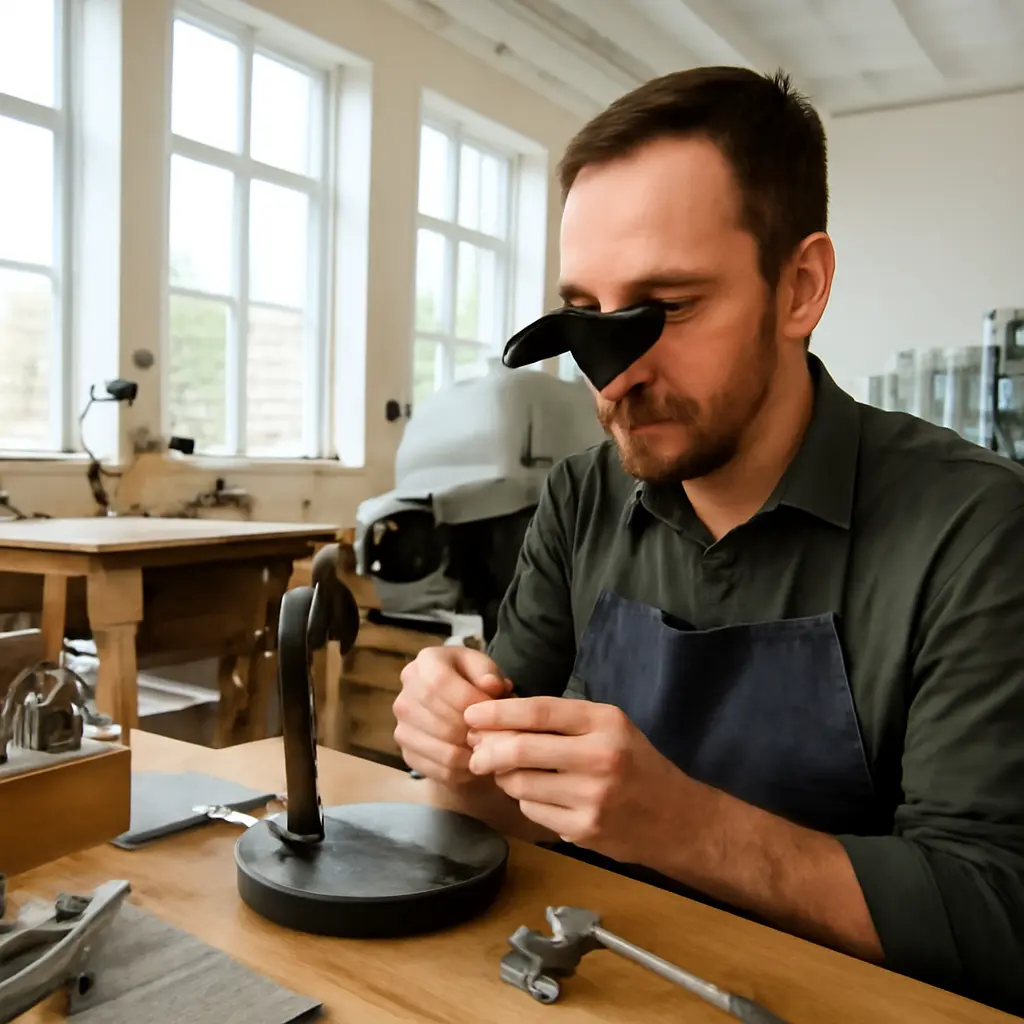
Demonstration records the work as it happens, allowing learners to see hand position, sequence, pace, tool interaction, and changes in technique. Video is useful when movement or timing matters; close-up views, clear audio, and a second camera angle may reveal details that a wide shot misses. Short clips organized around a particular task or decision are often easier to use than a single long recording.
Recording alone does not guarantee transfer. The expert should narrate actions where possible, pause to explain decision points, and repeat critical steps at a learner-friendly pace. Annotated still images, diagrams, measurements, and examples of acceptable and unacceptable results can make the footage searchable and interpretable. Obtain informed consent, clarify ownership and access, and avoid recording sensitive customer, personal, or security information without authorization.
Apprenticeship turns records into usable skill
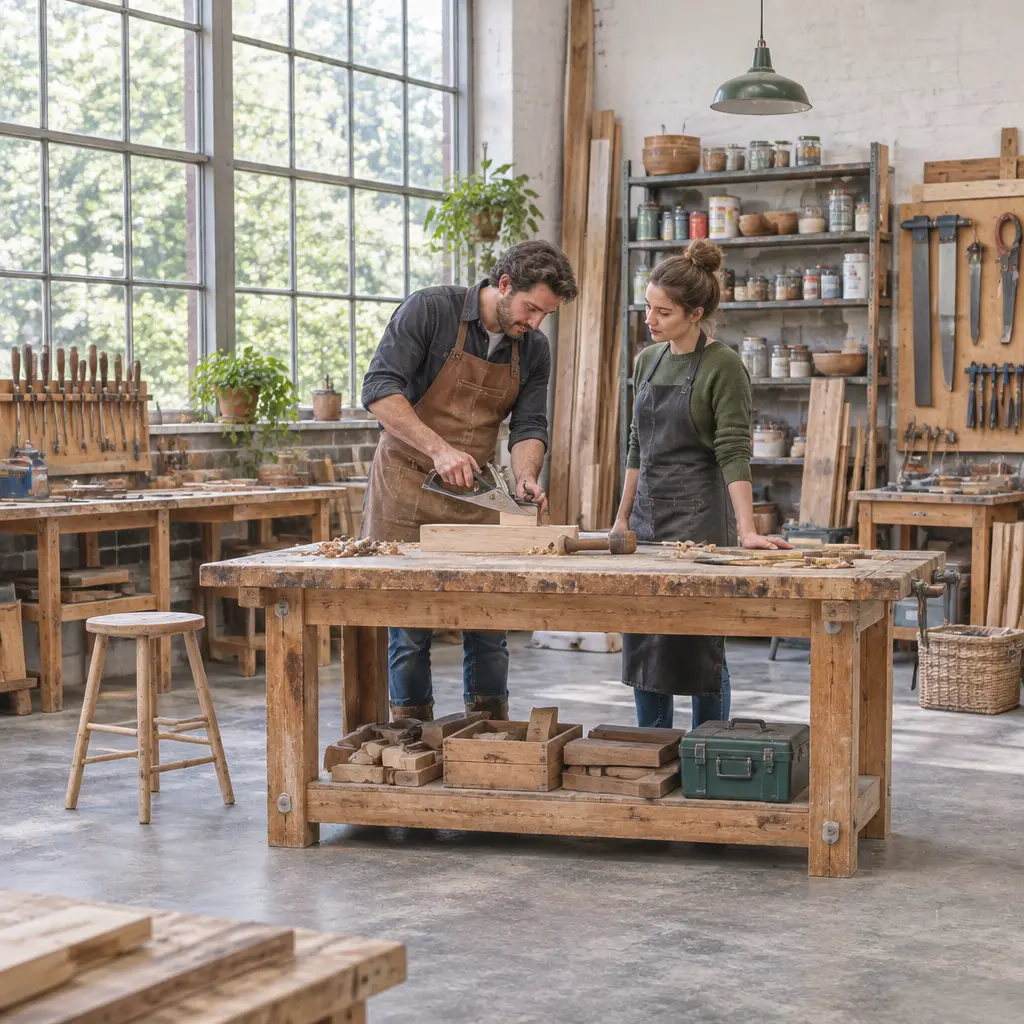
Apprenticeship is supervised learning in which a novice observes, attempts, receives feedback, and gradually takes responsibility for the work. It is essential because many skills cannot be learned by reading or watching alone. A strong knowledge-transfer plan pairs documentation with deliberate practice: the learner studies a record, performs the task, explains their decisions, and receives feedback from the expert or a qualified assessor.
UNESCO’s living-heritage framework treats transmission between generations as central to safeguarding cultural practices. The same logic applies in commercial and industrial settings: a record is most valuable when it supports a continuing relationship between experienced practitioners and learners. Where feasible, organizations should schedule overlap between the retiring expert and successors instead of postponing training until after the departure.
Validates and organizes savoir-faire records for future use
Validation determines whether a captured record is accurate, understandable, safe, and useful to someone other than its author. A polished transcript or video can still preserve a mistaken assumption or omit an important condition. Validation should therefore involve the expert, a learner, and—where relevant—a quality, safety, engineering, or cultural-heritage specialist.
The National Institute of Standards and Technology’s manufacturing guidance underscores the broader need for reliable process information and workforce capability. For craft documentation, reliability depends not only on the media format but also on context: what materials, tools, environmental conditions, tolerances, and skill level the record assumes.
Learner testing checks whether guidance is transferable
Learner testing asks a person who did not create the record to use it to perform or explain the task. The learner’s questions expose missing steps, unexplained jargon, ambiguous images, and decision points that the expert takes for granted. A test should include a normal example and, when safe and practical, a representative variation or fault condition.
Teams can assess transfer using observable criteria such as task completion, defect rate, need for prompts, time to proficiency, and the learner’s ability to explain why a decision was made. These are local performance measures, not automatically comparable industry benchmarks. Record the baseline and the method so later results can be interpreted fairly.
Structured metadata makes records findable
Metadata is the information that describes a record and helps people retrieve and interpret it. A useful entry can include the task name, craft or trade, expert and recorder, date, version, tools and materials, relevant conditions, skill level, safety requirements, related SOPs, and keywords for cues or defects. A short summary should state what the record teaches and when it applies.
Preservation also requires durable storage, backups, access controls, and clear responsibility for updates. The U.S. National Archives and Records Administration’s guidance on digital preservation emphasizes that digital files need active management rather than passive storage. Organizations should preserve original files where possible, use broadly supported formats, and keep documentation linked to the tools, product versions, and procedures it describes.
Governance protects rights, safety, and cultural context
Governance sets the rules for who may create, view, reuse, revise, and share the record. Before capturing knowledge, agree on consent, attribution, confidentiality, intellectual property, and retention. In Indigenous and community-based crafts, the community may have authority over knowledge that should not be recorded or circulated publicly; UNESCO’s ethical principles for intangible cultural heritage emphasize the primary role of communities and practitioners in safeguarding their heritage.
Technical content also needs controlled review. Changes to a process can affect product quality, worker safety, or compliance, so records should show revision dates and approval status. A knowledge record should make clear whether it is descriptive, advisory, or an authorized instruction, and it should direct users to current approved procedures when necessary.
Applies savoir-faire documentation across craft and industry
Savoir-faire documentation is useful wherever expertise depends on learned perception and action. The specific mix of interviews, visual records, practice, and formal specifications should reflect the work. A craft tradition may prioritize community authority and the meaning of practice; a factory may prioritize repeatability, safety, and process control; a conservation workshop may need condition records and carefully bounded interventions.
Traditional crafts preserve living heritage
In traditional crafts, documentation can support transmission while recording the context that gives a technique meaning: materials, tools, local terminology, customary uses, and the practitioner community. UNESCO’s Representative List of the Intangible Cultural Heritage of Humanity and its other lists provide international examples of living practices recognized for safeguarding, but listing alone does not preserve a skill. Continued practice, access to materials, and teaching relationships remain essential.
A practical case is the documentation of a master potter’s glaze process. A record might combine a narrated firing demonstration, samples labelled by clay and glaze batch, notes on kiln conditions, and the potter’s observations about color and surface. The record should distinguish repeatable measurements from judgments that require supervised practice, and the community should decide whether any techniques or designs are restricted.
Manufacturing retains production and maintenance expertise
Manufacturers can use savoir-faire records to preserve setup knowledge, troubleshooting, tool changes, repair techniques, and judgments about acceptable variation. The BLS projection of roughly 34,900 annual openings for welders, cutters, solderers, and brazers in the United States from 2023 to 2033 illustrates the continuing need to train and replace skilled workers. That figure covers occupational openings nationally; it is not a count of retirements or a measure of the number of experts at risk in any particular company.
For example, a maintenance technician’s record could pair a fault-symptom table with audio or video of equipment behavior, annotated photographs of wear patterns, and a decision tree for escalation. A successor can then test the guide during supervised maintenance and flag cases where the record fails to distinguish similar symptoms. This converts personal troubleshooting experience into a checked organizational resource.
Conservation and specialist repair record material judgment
Conservation, musical-instrument repair, and restoration involve decisions where intervention must account for material condition, history, and intended use. Records can include before-and-after images, material identification, test results, environmental conditions, treatment rationale, and uncertainty. The goal is not to imply that every judgment can be reduced to a formula, but to make reasoning and evidence available for review and future decisions.
In a specialist repair shop, for instance, an experienced instrument maker might document how they assess a joint, choose an adhesive, and decide whether a repair should be reversible. The record should identify the instrument and materials appropriately while protecting owner information. A trainee’s supervised assessment can then test whether the explanation supports sound judgment rather than merely copying a sequence of actions.
Builds a retirement-ready knowledge transfer plan
A retirement-ready plan treats knowledge continuity as a managed project with named owners, a realistic schedule, and evidence that successors can perform critical work. It should begin early enough to allow observation, repeated practice, revision, and relationship-building. If retirement timing is uncertain, organizations can still reduce exposure by identifying single-person dependencies and arranging cross-training.
A practical sequence moves from inventory to reassessment
A compact program can proceed through the following stages:
- Identify retiring or hard-to-replace experts and list the tasks that depend on them.
- Prioritize tasks by consequence, scarcity, training lead time, and frequency.
- Pair each expert with a recorder and one or more learners, with time allocated for practice.
- Capture work through observation, focused interviews, demonstrations, and examples of exceptions.
- Organize records with metadata, safety references, access rules, and version control.
- Ask learners to use the records, document gaps, and revise them with expert review.
- Reassess after the expert leaves, after process changes, and on a scheduled review cycle.
The stages can be scaled to a small workshop or a large enterprise. A small team may use a shared repository and a simple task register; a regulated manufacturer may need formal approvals and controlled document systems. In either case, assign responsibility for every record so it does not become an unmaintained file.
Measures show whether transfer is working
Useful measures include the share of critical tasks with validated records, the number of qualified people per task, learner time to independent performance, error or rework rates, and the proportion of records reviewed on schedule. These indicators help identify whether the organization is reducing dependence on one person. They should be interpreted alongside work complexity and safety requirements rather than treated as proof of competence on their own.
A simple chart can display task-risk scores before and after documentation and training, while a skills matrix can show which employees can observe, assist, perform, or teach each task. Teams should label the chart’s scoring method and reporting period, and avoid publishing personal performance information without appropriate consent and safeguards.
Conclusion: Treats retiring expertise as a renewable resource
Savoir-faire documentation captures more than instructions: it makes tacit judgment, embodied technique, diagnostic cues, and craft context available for teaching and responsible reuse. Observation, cognitive task analysis, video, structured metadata, learner testing, and apprenticeship each address a different part of the transfer challenge. Validation and governance ensure that records are accurate, safe, findable, and respectful of the people and communities who hold the knowledge.
Retirement creates a deadline, but the broader issue is continuity. As UNESCO’s living-heritage work and workforce projections from the U.S. Bureau of Labor Statistics illustrate in different contexts, skills survive when people have opportunities and systems to learn them. Organizations should identify single-person dependencies now, schedule expert–learner overlap, and test records in real work before the knowledge holder leaves. Further reading from UNESCO, the International Labour Organization, NIST, and the National Archives can help teams tailor a program to cultural, manufacturing, and records-management needs.
Sources: UNESCO, Living Heritage and the Sustainable Development Goals: Safeguarding Intangible Cultural Heritage for the Well-Being of Humanity, 2022, https://ich.unesco.org/doc/src/50292-EN.pdf; UNESCO, Representative List of the Intangible Cultural Heritage of Humanity, https://ich.unesco.org/en/lists; UNESCO, Ethical Principles for Safeguarding Intangible Cultural Heritage, https://ich.unesco.org/en/ethics-and-ich-00866; U.S. Bureau of Labor Statistics, Occupational Outlook Handbook: Welders, Cutters, Solderers, and Brazers, https://www.bls.gov/ooh/production/welders-cutters-solderers-and-brazers.htm; International Labour Organization, Ageing and Employment Policies: Working Better with Age, https://www.ilo.org/global/topics/older-workers/lang–en/index.htm; National Institute of Standards and Technology, Manufacturing Workforce Development, https://www.nist.gov/oam/manufacturing-workforce-development; National Archives and Records Administration, Digital Preservation, https://www.archives.gov/preservation/electronic-records; Michael Polanyi, The Tacit Dimension, University of Chicago Press, 1966; Ikujiro Nonaka and Hirotaka Takeuchi, The Knowledge-Creating Company: How Japanese Companies Create the Dynamics of Innovation, Oxford University Press, 1995.